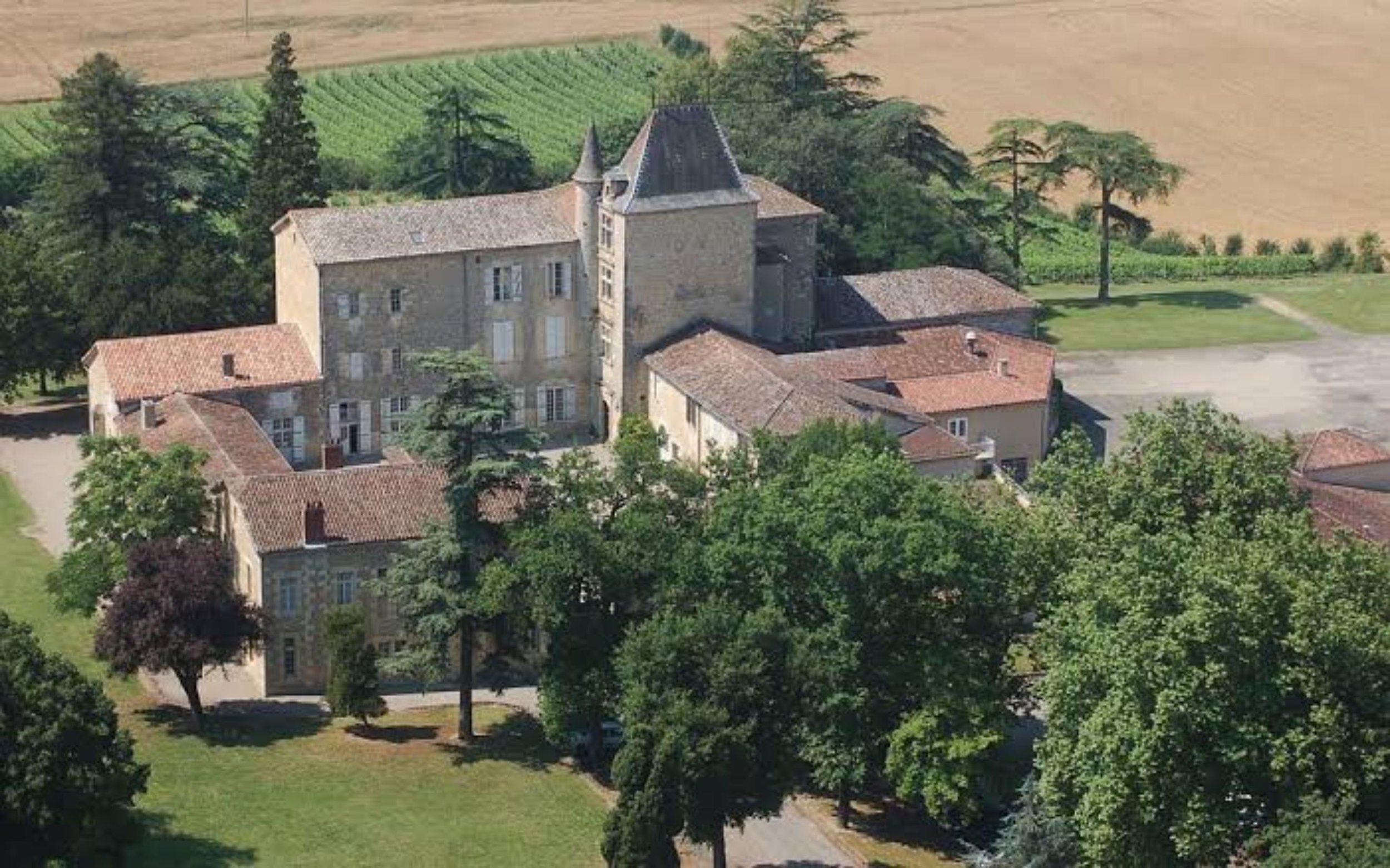
Les Trésors du Château de Mons
The Forgotten Grapes Series
4 forgotten grapes, 4 casks, 4 colors of Armagnac
Coming September 2026
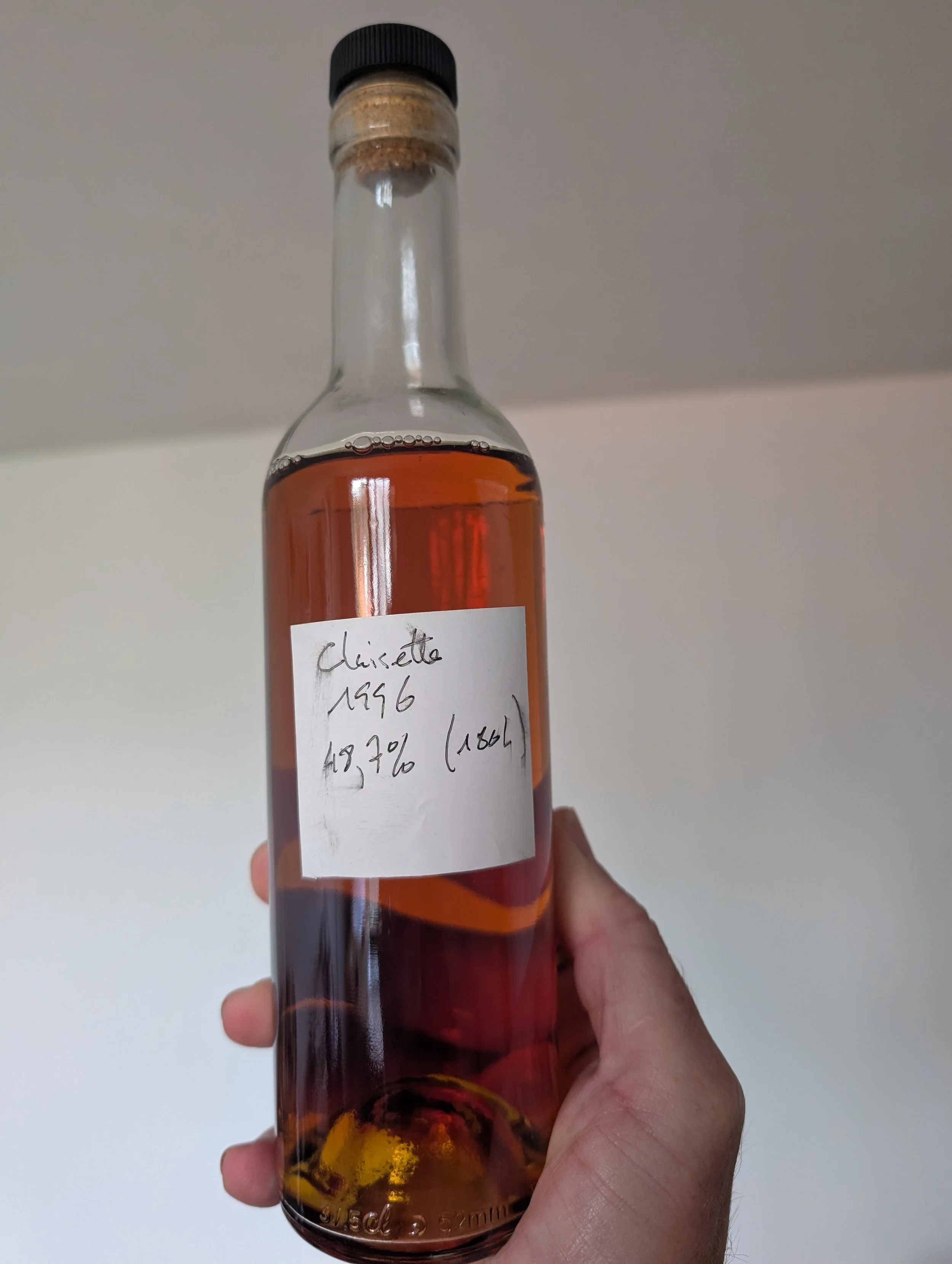
MONS 1996
Clairette de Gascogne
49.3 %
single cask #13
color : purple
228 bottles
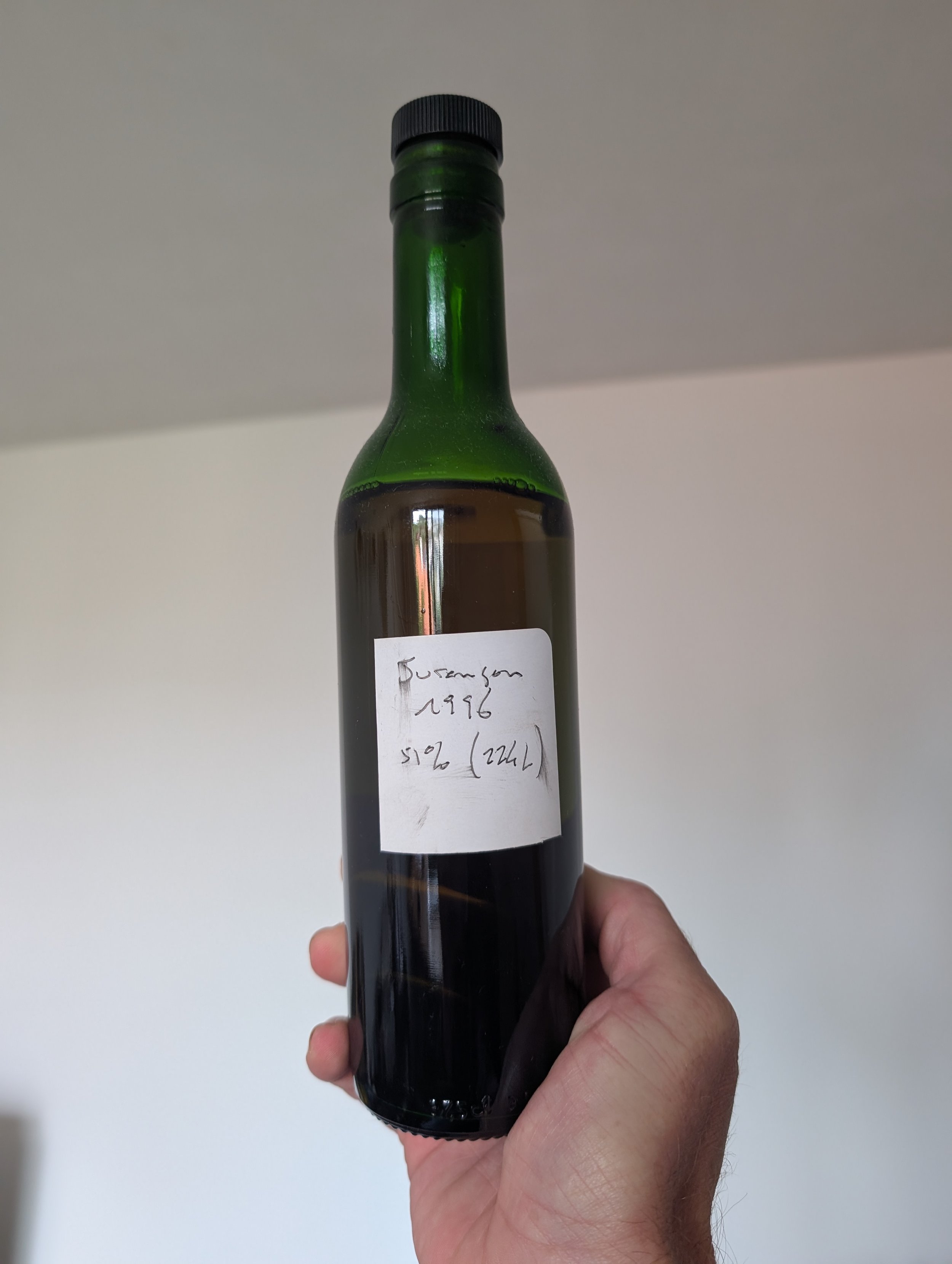
MONS 1996
Jurançon
51.4 %
single cask #14
color : green
306 bottles
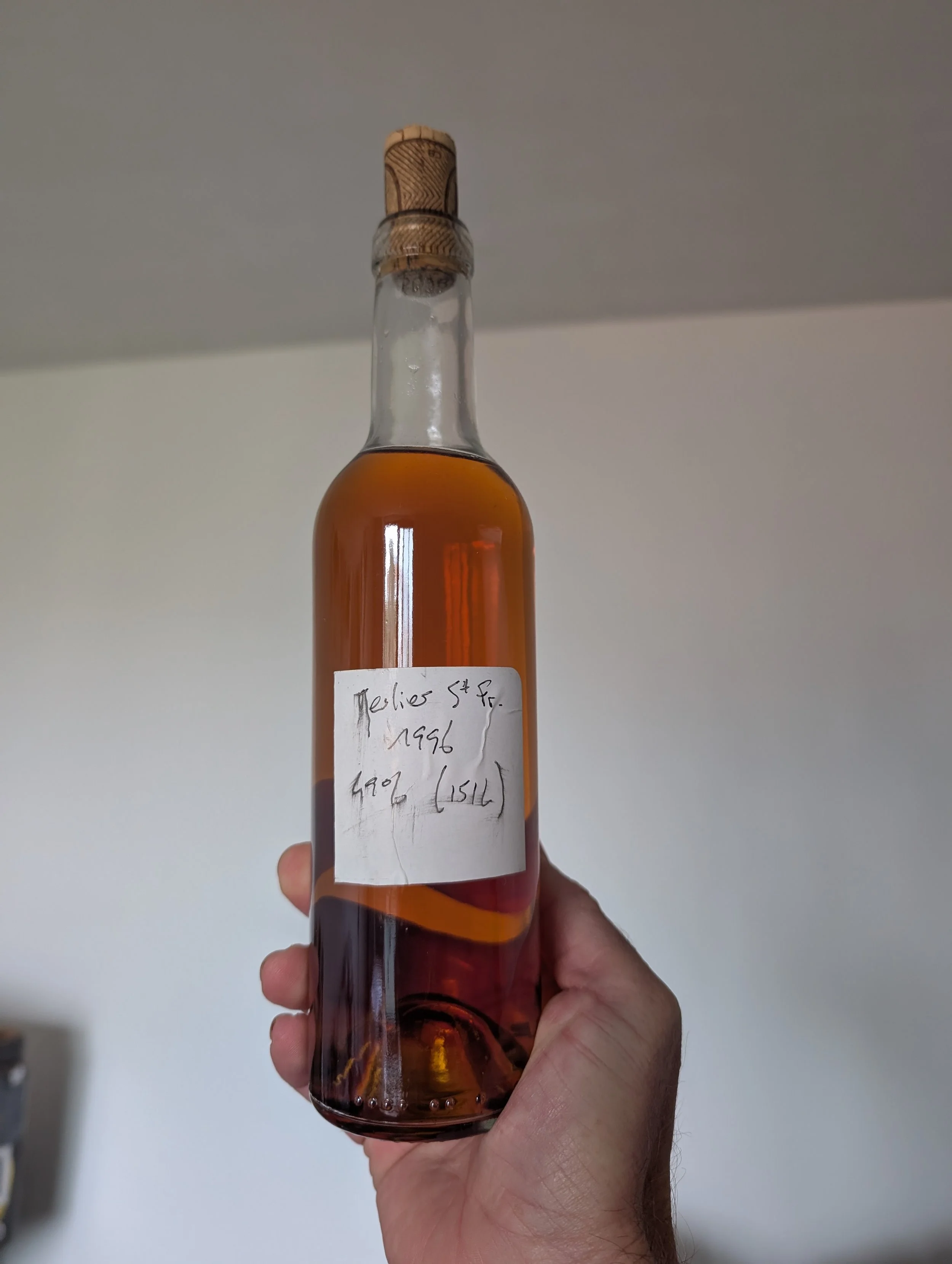
MONS 1996
Meslier St François
49.6 %
single cask #15
color : dark orange
210 bottles
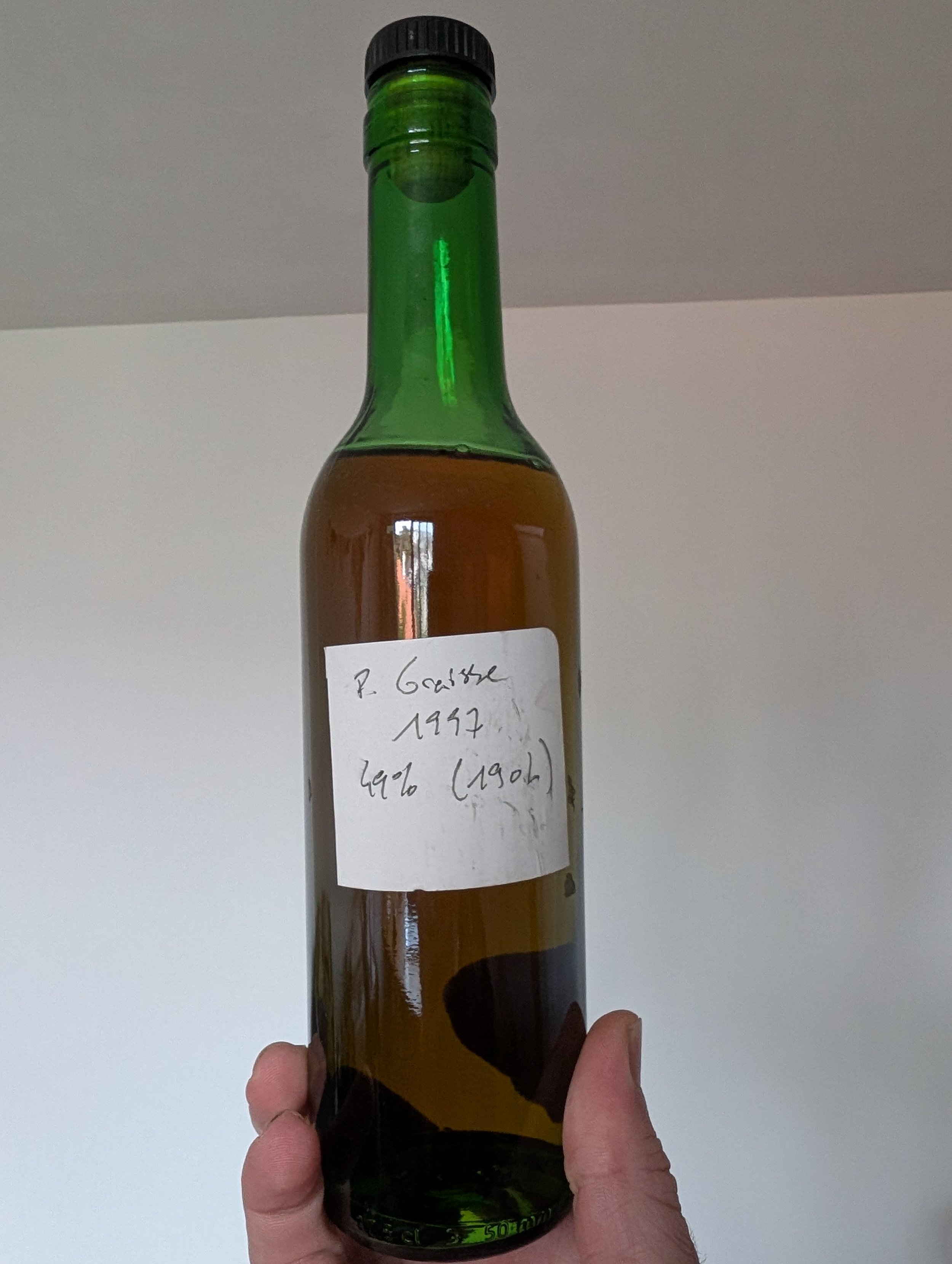
MONS 1997
Plan de Graisse
49.6 %
single cask #19
color : dark yellow
246 bottles
What is presented here is not a range.
It is an apparition. A suspended moment, plucked from time.
Unique.
Tasting these armagnacs is not just discovering rare profiles.
It is stepping into a hypothesis. Another reading of Armagnac.
Each glass carries its trace. Sensitive. Persistent.
Like a fragment of history left intact.
This convergence there will not happen again.
1990 – 2000 : The Experiment
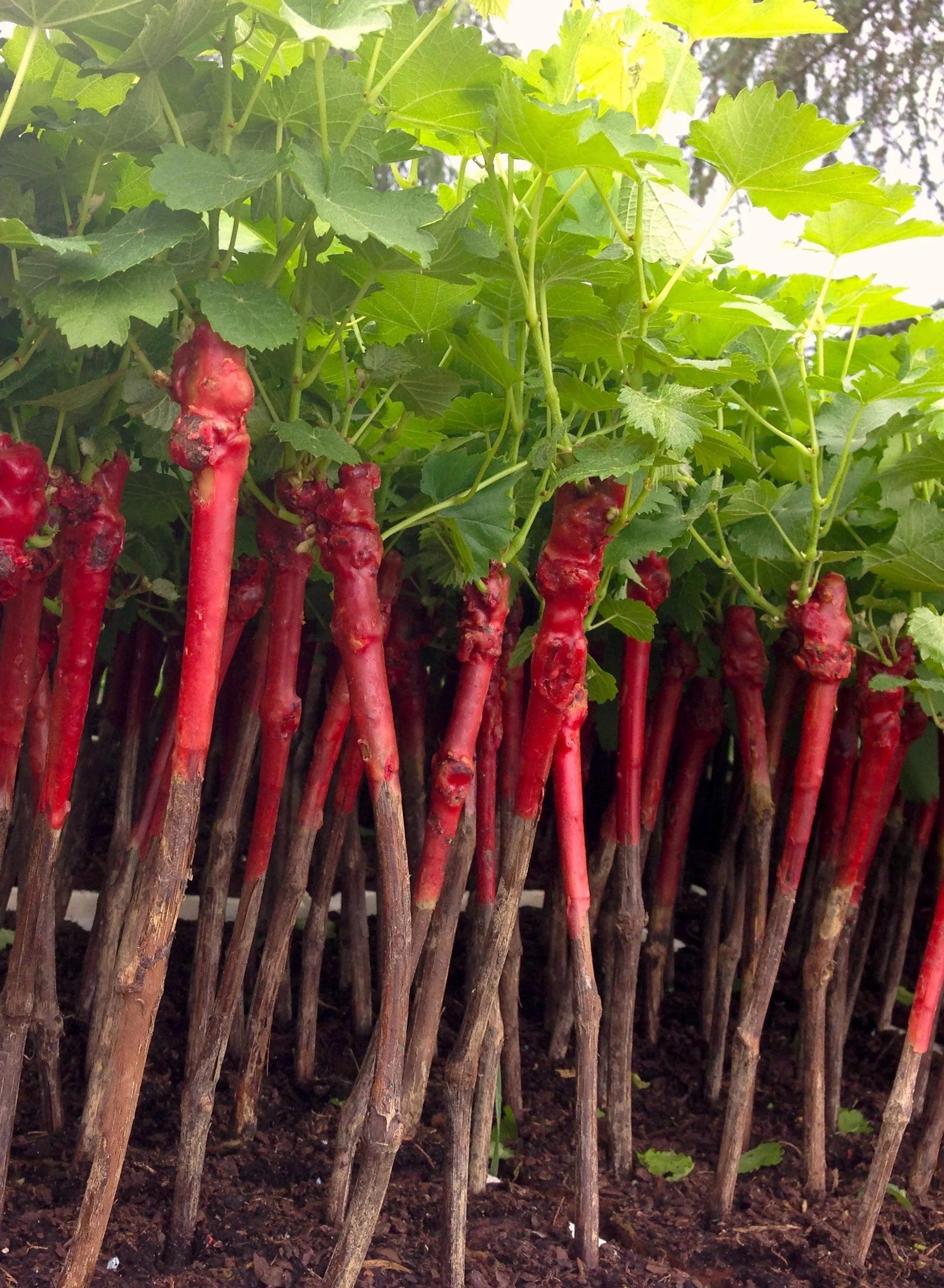
In the early 1990s, as Baco's future hung in the balance, the Gers Chamber of Agriculture and the BNIA launched a remarkably ambitious project: the replanting of forgotten grape varieties.
Varieties set aside, pushed to the margins of history, yet never entirely erased.
Names still whispered today: Clairette de Gascogne, Meslier Saint-François, Jurançon Blanc, Plan de Graisse.
Thirty ares of each variety were planted at Château de Mons. The first harvest came in 1995.
Each variety was vinified and distilled separately.
Each eau-de-vie was matured in well-seasoned oak casks, allowing the grape, the terroir and time to speak for themselves.
No artifice. No embellishment. No interference.
To let a voice emerge. The voice of the grape.
The 2000s: The End of the Search
As the experiment continued, Baco ultimately secured its permanent place among the authorized grape varieties of the Armagnac AOC.
Its resilience, reliable yields and distinctive character once again made it indispensable.
The experiment lost its sense of urgency. It became peripheral. It faded into the background.
The project quietly came to an end, like a parenthesis being closed.
Or so it seemed.
2026: The Taste of History.
For at Château de Mons, something escaped oblivion.
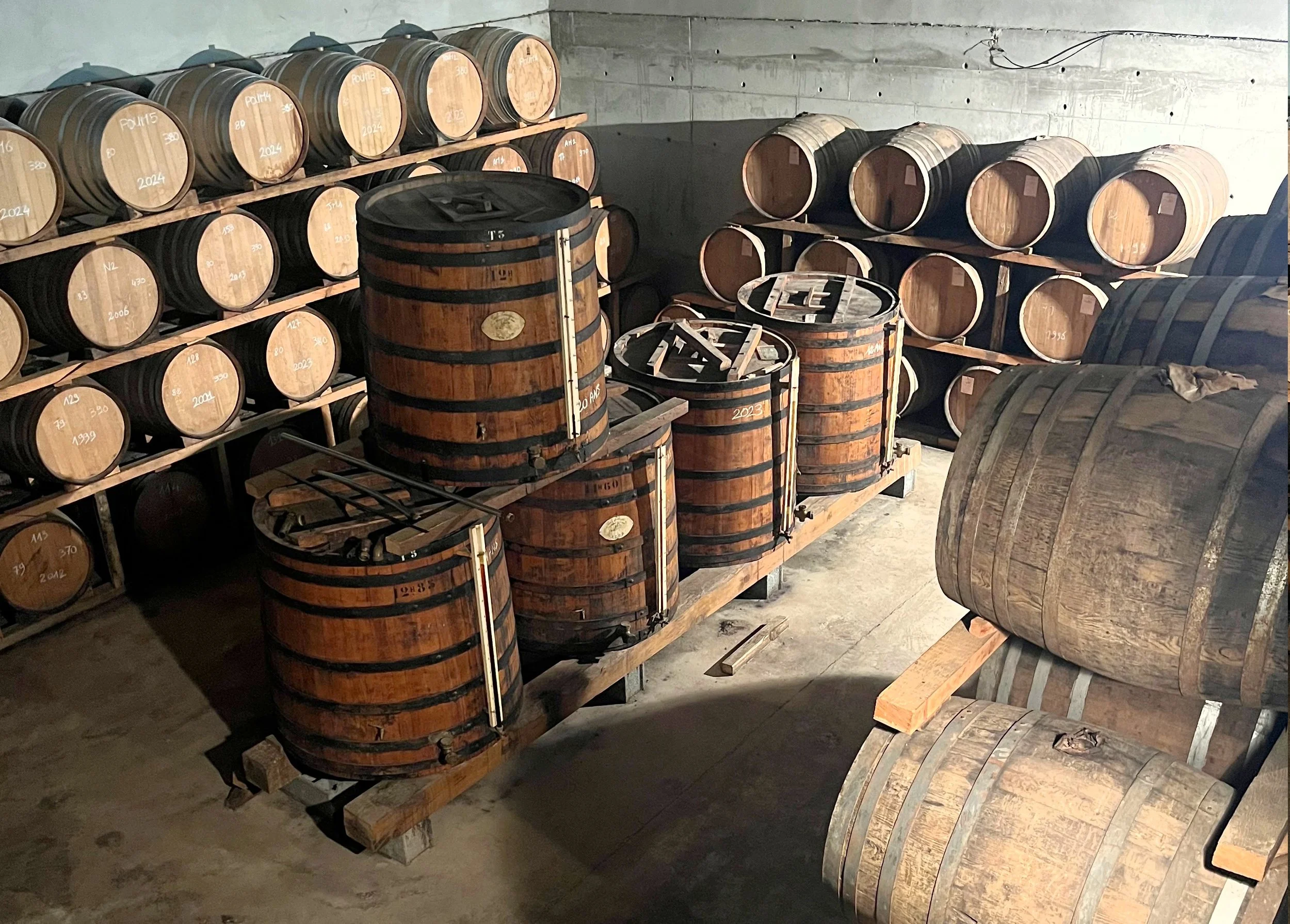
In the dim light of the aging warehouses, away from prying eyes, a few casks remained.
One for each grape variety.
No topping up. No correction. No intervention other than time itself.
The years passed. The level in the casks slowly fell. Time took its share. The angels.
The aromas tightened, concentrated, evolved.
Each cask became a world of its own. A liquid memory.
What remains today is almost miraculous. A few dozen liters.
A trace.
The forgotten grapes Series
LE BARREUR and PM Spirits open these casks today.
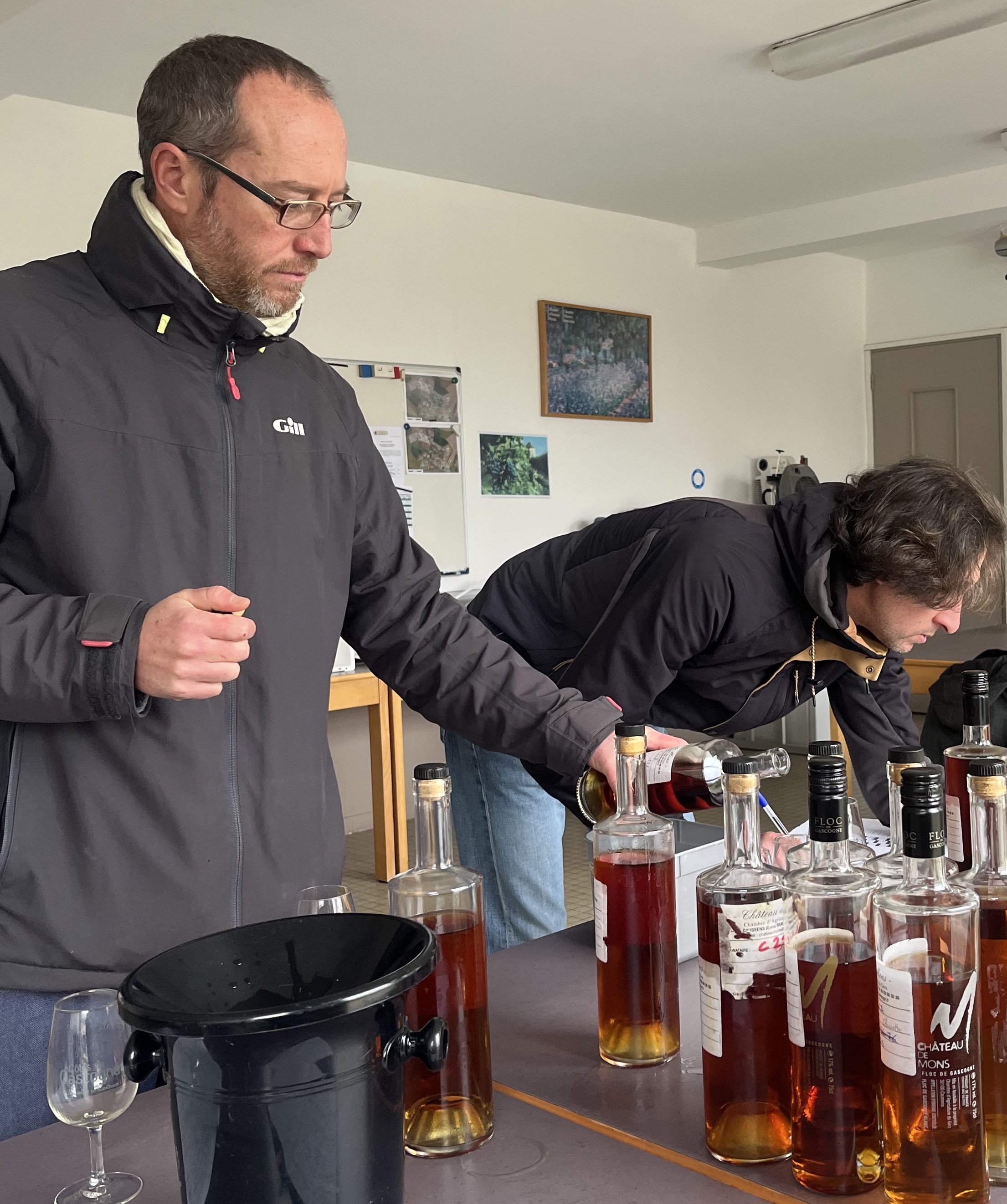
We explored each of the few remaining casks from these four grape varieties still resting in the warehouses of Château de Mons.
We tasted. Compared. Questioned. Then tasted again.
Not to choose the most spectacular. But the truest.
The cask that expresses the grape.
The cask that tells the story of its place.
The cask that speaks of Armagnac.
Acknowledgements
The Forgotten Grapes Series would not have been possible without the invaluable support of the following individuals:
Sébastien Pique and Jean Mora (both former managers of Domaine de Mons), Agnès Chabrillanges (Director of Domaine de Mons), and Caroline Rozès (Armagnac producer at Domaine d’Aurensan and specialist in the historic grape varieties of the Armagnac appellation).
*************************************

An Armagnac smuggler. A storyteller. A nomadic bottler. LE BARREUR works side by side with artisan distillers throughout Gascony, picking single casks in remote cellars and bottling them directly on the estate.
SAVEUR , January 2017 :
“Importer Nicolas Palazzi collects exceptionnal cognacs and handmade eaux-de-vie - but his greatest finds are families and the stories behind them.”